Dr. Gymbro
←

#time trial

2 articles
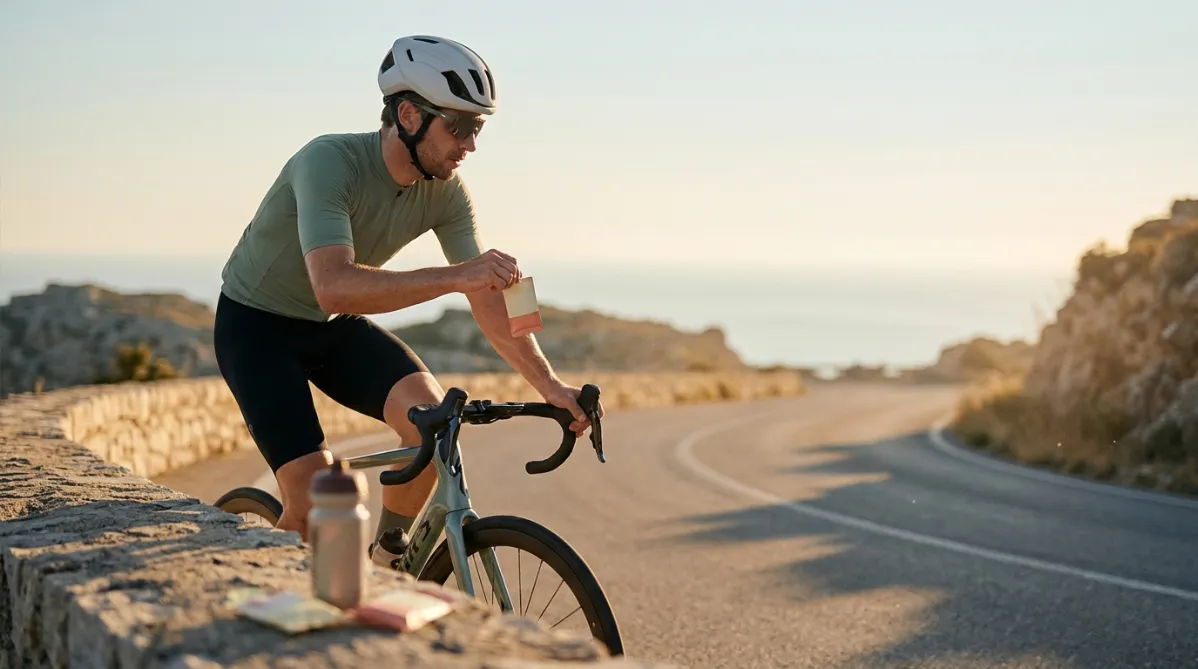
A cyclist in profile, riding a sleek road bike along a quiet coastal road in warm golden-hour light, shot from a low side angle with a shallow depth of field. The rider wears a muted sage-green jersey, black bib shorts, a matte white helmet, and sunglasses. Their face shows calm, focused fatigue, with a faint sheen of sweat on the forearms. One hand is lifted slightly from the handlebars, holding a small, unbranded matte gel packet in soft cream and coral tones, just before opening it. The road curves gently behind them toward a hazy, softly blurred horizon of pale sea and distant hills, with long amber shadows stretching across the asphalt.

In the foreground, slightly out of focus, a few gel sachets and a bike bottle rest on a weathered stone wall at the left edge of the frame, adding editorial depth. Fine dust and sunlight glow in the air. The palette is warm and restrained: butter yellow, soft peach, sage, and slate blue, with gentle film-like grain. The composition leaves open negative space in the upper right, a pale gradient sky, for headline overlay. The overall look is a modern, minimalist sports-science magazine photograph: natural, premium, and clean, with realistic textures, cinematic but understated color grading, and no text, logos, or graphics.
nutrition

Gel Bicarb Trên Đường Đua Tăng 12 W Sau 3 Giờ Đạp Xe

BY DR. GYMBRO ·

Nếu thời điểm tối ưu để dùng bicarbonate không phải trước khi xuất phát mà là trong lúc đua thì sao? Một thí nghiệm ngẫu nhiên trên 11 vận động viên đạp xe được đào tạo đã so sánh gel chứa bicarbonate kết hợp carbohydrate trong suốt 3 giờ đạp. Khi đã mệt, công suất trong bài kiểm tra thời gian 12 phút tăng hơn 12 W so với chỉ dùng carbohydrate, trong khi các triệu chứng tiêu hoá không khác biệt. Tuy nhiên, các bài chạy ngắn và nỗ lực 2 phút không cho thấy lợi ích đáng kể, mẫu nghiên cứu rất nhỏ và sản phẩm được tài trợ bởi MNSTRY. Dưới đây là các số liệu thực tế.
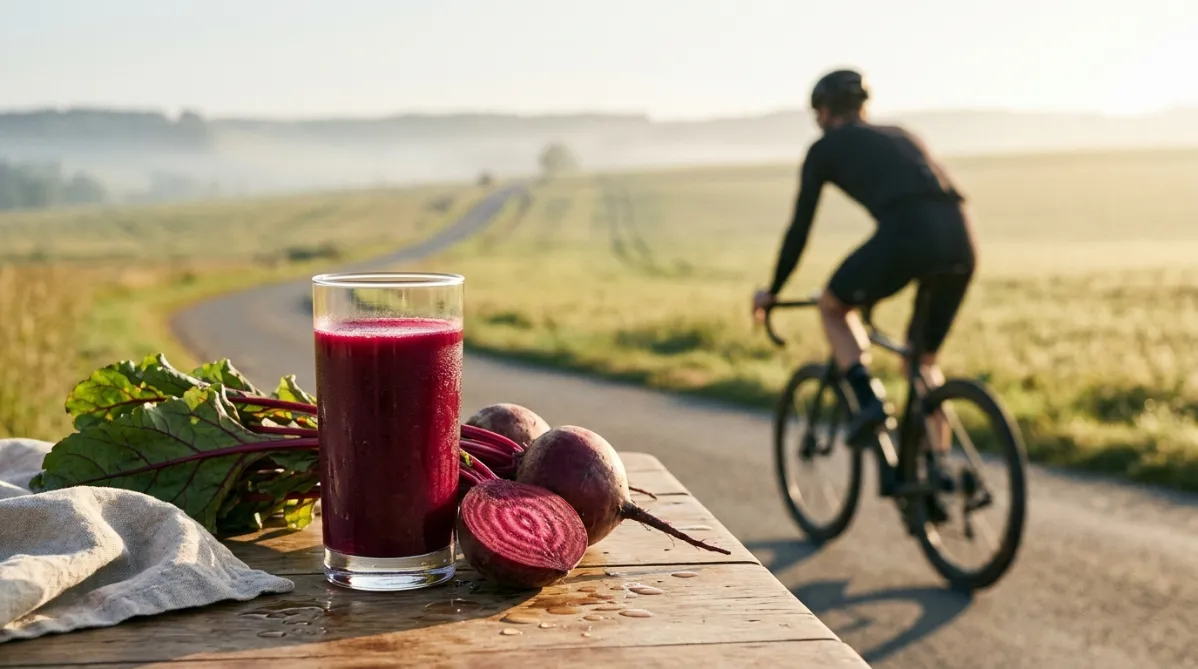
A cyclist in a fitted matte-black kit, shot from a low three-quarter angle, rides a sunlit country road at early morning, slightly out of focus with soft motion blur on the wheels. In the foreground on the left sits a rustic wooden table with a tall glass of deep magenta beetroot juice. Condensation beads on the glass, and the light catches its vivid jewel-toned color. Beside it lie two whole beetroots with their leafy red-veined greens still attached, and one halved beet shows concentric crimson-and-pink rings. A small linen napkin and a scatter of water droplets add an editorial still-life feel.

The background is a gently rolling landscape with golden-green fields and a thin ribbon of asphalt curving toward the horizon. Pale mist hangs low and warm sunlight comes from the right, creating long soft shadows and a golden rim light on the glass and the cyclist's silhouette. The shallow depth of field keeps the juice and beets crisp while the rider stays a dreamy blurred suggestion of speed.

The palette is rich magenta, burgundy, warm cream, sage green, and soft gold, with muted, slightly desaturated tones in the background so the beetroot color stands out. The composition follows the rule of thirds, with the still-life in the lower left third and open negative space in the upper right for the title. The overall look is a clean, modern lifestyle-magazine photograph with natural film-like grain, calm and athletic, and no text, logos, or futuristic elements.
nutrition

Nước Củ Dền Trước Cuộc Đua Thời Gian: 0,5 L Giảm Thời Gian Đạp 4 km và 16,1 km Gần 3 %

BY DR. GYMBRO ·

Một thử nghiệm quy mô nhỏ năm 2011 đã kiểm tra xem ly nước củ dền có thể rút ngắn thời gian đua thực tế hay không. Chín vận động viên đạp xe nam đã uống 0,5 L nước củ dền giàu nitrate (khoảng 6,2 mmol nitrate) khoảng 2,5 giờ trước khi thi đấu. Nồng độ nitrit huyết tương tăng gấp đôi, công suất trung bình lên và thời gian 4 km, 16,1 km giảm lần lượt 2,8 % và 2,7 %. Đáng chú ý, nhu cầu oxy (VO₂) không thay đổi, cho thấy cải thiện hiệu suất đến từ việc tiết kiệm oxy chứ không phải tăng công suất tim mạch. Bài viết tóm tắt quy trình, các số liệu và hạn chế của nghiên cứu.

This page is available in